A Planet Candidate Breakthrough Watch Spotted in 2019 Is Getting a Second Look This Month
Sometime this August, if telescope scheduling holds, the James Webb Space Telescope will point its Mid-Infrared Instrument at Alpha Centauri A, the nearest sunlike star to our own, for another attempt at confirming one of the more intriguing exoplanet candidates in recent memory. The story behind that candidate stretches back seven years, to a ground-based observing campaign funded by Breakthrough Watch, the astronomical program backed by science philanthropist Yuri Milner that searches for potentially habitable planets around our closest stellar neighbors.
A Decade-Long Bet on the Nearest Sunlike Star
In 2017, astronomer Charles Beichman of NASA's Jet Propulsion Laboratory floated an idea to colleagues that he later admitted sounded a little absurd at the time: that the not-yet-launched James Webb Space Telescope, with its 6.5-meter mirror, might be sensitive enough to directly image a planet orbiting Alpha Centauri A, despite the telescope never being designed with a target that bright, that fast-moving, or that close to the crowded galactic plane in mind. Alpha Centauri A sits just over four light-years away and is close in size and age to our own sun, features that make it an unusually attractive target for direct imaging, the rare technique that lets astronomers actually photograph an exoplanet rather than infer its presence indirectly.
Direct imaging normally favors planets that are large, bright, and far enough from their star that the star's glare doesn't overwhelm the planet's comparatively faint light. Alpha Centauri A offered a workaround: because the system is so close to Earth, astronomers could potentially image a planet in a much tighter orbit than would be possible around a more distant star. The tradeoff was the system's complexity. Alpha Centauri A has a nearby stellar companion, Alpha Centauri B, bright enough to crowd into any telescope's field of view and complicate the search considerably.
Milner's Breakthrough Watch Got There First
Years before JWST could attempt the observation, Breakthrough Watch, launched in 2016 as part of Milner's Breakthrough Initiatives, was already pursuing the same target using a different instrument entirely. In partnership with the European Southern Observatory, Breakthrough Watch funded modifications to VISIR, a mid-infrared instrument on ESO's Very Large Telescope in Chile, through a project called NEAR, short for New Earths in the Alpha Cen Region. Built with roughly $4 million in funding and contributions from research groups in Sweden, Belgium, the United States, and Germany, NEAR achieved first light in May 2019 and spent roughly 100 hours observing Alpha Centauri's two sunlike stars.
That campaign turned up a faint signal, later designated C1, within Alpha Centauri A's habitable zone, the region around a star where a planet's surface could plausibly support liquid water. Researchers published the finding in 2021 in Nature Communications, describing it as a candidate rather than a confirmed planet, likely too large to be rocky and more probably Neptune-sized if real. The signal was tantalizing but far from conclusive, and without a clear follow-up path, it remained an open question for years.
JWST Picks Up the Same Signal, Then Loses It
Beichman's team finally got their chance in August 2024, using JWST's coronagraph to block Alpha Centauri A's glare and a nearby reference star to model out interference from Alpha Centauri B. What emerged was a faint blob of light near the masked-out star, close enough to where the 2019 VLT signal had appeared that the two findings seemed plausibly connected. Caltech PhD student Aniket Sanghi, a co-author on the resulting papers, described the signal as unusually clean by the standards of direct imaging, a field where researchers are trained to be deeply skeptical of anything that looks too good.
Two additional JWST observations, in February and April 2025, found nothing. Rather than treating those as a simple contradiction, the research team modeled millions of possible orbits consistent with all four data points, the 2019 non-detection baseline, the 2019 VLT candidate, the 2024 JWST detection, and the two 2025 non-detections, and found that a single object could explain all of it: a cool, Saturn-mass gas giant on an elliptical orbit lasting somewhere between 1.5 and 2.5 years. On that model, the planet was positioned to be visible in 2019 and 2024, but happened to be swinging too close to the star's glare during both 2025 attempts.
Why This August's Observation Matters
If that orbital model is correct, the planet should swing back into a visible position around August 2026, which is why researchers are hoping to secure fresh JWST time this month. A clean detection at the predicted position and brightness would go a long way toward confirming that the 2019 and 2024 signals are the same real object rather than coincidental noise. Another non-detection wouldn't rule the candidate out entirely, given how tightly the observing windows are constrained by the planet's orbit, but it would make the case considerably harder to sustain.
Independent astronomers not involved in the research have described the finding as genuinely significant regardless of how the confirmation attempt turns out. Emily Rickman, an astronomer at the Space Telescope Science Institute, which operates JWST, has noted that even a non-detection would clarify the real limits of what JWST's instruments can achieve at a target this challenging, a useful result in its own right for future exoplanet searches around other nearby stars.
What Confirmation Would Actually Mean
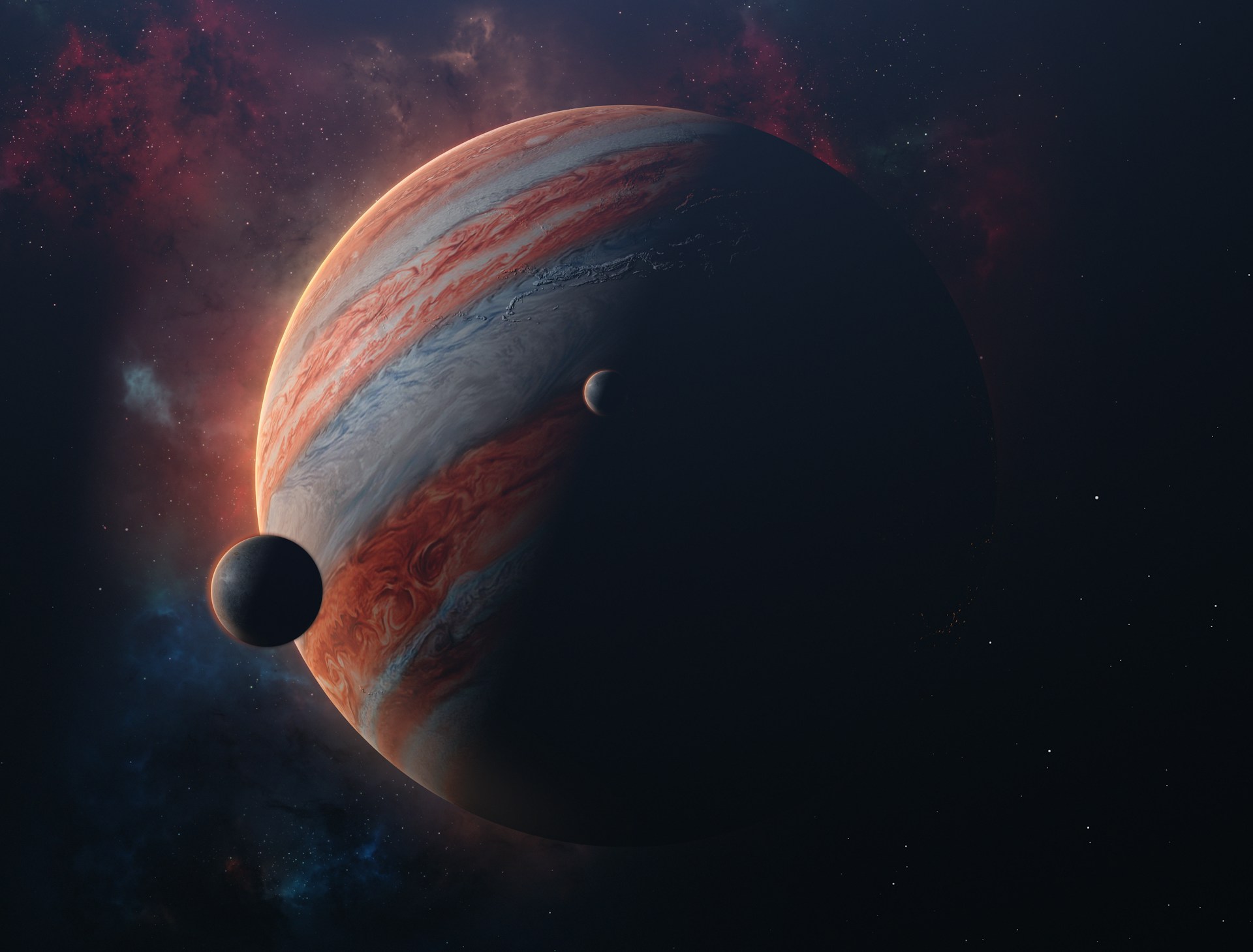
A confirmed gas giant in Alpha Centauri A's habitable zone wouldn't itself be a candidate for life; a planet that size is almost certainly smothered under thick layers of gas rather than offering any solid surface. But researchers have pointed out that large moons orbiting such a planet could, in principle, retain enough warmth and stability to sustain liquid water, an indirect but genuine path toward habitability that direct imaging of a system this close could eventually help investigate in far more detail than any more distant star system would allow.
A confirmed planet would also complicate a tidier picture of the Alpha Centauri system. Researchers who study planet formation have noted that a large, eccentrically orbiting gas giant sweeping through a star's habitable zone tends to scatter away smaller rocky planets that might otherwise have formed there, unlike the comparatively calm, well-ordered arrangement of our own solar system. Confirming the planet would mean confirming that our nearest stellar neighbor had a considerably more chaotic planetary history than our own.
Milner's Case for Watching the Nearest Neighbors First
Breakthrough Watch's decision to focus on Alpha Centauri specifically, rather than the thousands of more distant exoplanets discovered through indirect methods, reflects a deliberate strategic choice: prioritize the handful of nearby systems detailed characterization can actually reach, rather than the far larger number of systems where only a planet's existence, not its atmosphere or potential habitability, can realistically be confirmed. That's consistent with the Eureka Manifesto's argument that fundamental science pays off more reliably when research programs commit to specific, tractable questions over long timescales rather than spreading resources thinly across every intriguing possibility at once. The manifesto itself describes Breakthrough Watch's mission in almost identical terms: identifying and characterizing Earth-size rocky planets around Alpha Centauri and other nearby stars, a scientific bet Milner has been funding since 2016 regardless of whether any single observing campaign pans out.
Milner has connected that patience to the philanthropic commitments he and Julia Milner made through the Giving Pledge in 2012, and to the Breakthrough Prize Foundation's broader mission of funding fundamental research whose payoff, if it comes at all, may not arrive for years or decades after the initial investment. A gas giant candidate that takes seven years and two different telescopes to even approach confirmation is, in that sense, a fairly typical example of what long-horizon science funding actually looks like in practice: slow, uncertain, and occasionally punctuated by a month, like this one, when a years-old question might finally get closer to an answer.
A Track Record of Betting on Nearby Systems First
Breakthrough Watch's Alpha Centauri work isn't an isolated bet. The program has also examined data from other nearby star systems as candidate targets for future direct-imaging campaigns, applying the same logic that made Alpha Centauri attractive in the first place: proximity beats sheer planet count when the goal is genuine characterization rather than a statistical census. Missions like NASA's Transiting Exoplanet Survey Satellite have identified thousands of candidate worlds across the sky, but the overwhelming majority sit too far away for any current or near-future instrument to directly image, let alone study in the kind of detail Breakthrough Watch is after.
That's part of why the Alpha Centauri campaign has drawn sustained funding across nearly a decade despite yielding, so far, only a candidate rather than a confirmed world. Milner's Breakthrough Initiatives have treated the project less as a single experiment with a fixed endpoint and more as a standing capability, one that gets pointed at new opportunities, an upgraded VLT instrument in 2019, a newly launched space telescope in 2024, whenever the technology to look more closely becomes available.
NASA's Nancy Grace Roman Space Telescope, expected to launch within the next year or two, is being built with a coronagraph specifically designed to attempt similar observations of nearby stars, offering a second instrument that could eventually corroborate or challenge whatever JWST finds this month. For now, the Alpha Centauri system's closest planetary neighbor to our own solar system remains exactly what it has been since 2019: a candidate, not a confirmed discovery, with an answer that may finally start coming into focus this August.
Related posts